
How opensource changed the world
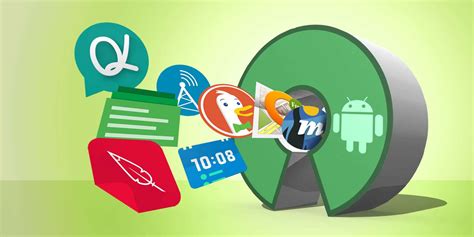
Open source software is present in our lives and many of us don’t even realize how important it has become!
GNU/Linux and BSD servers support our websites, online stores, corporate networks, mobile devices, personal computers, supercomputers, among many other applications…
Twenty years ago, the notions of free software, where users could “peek” at the source code of an application, already existed thanks to the efforts of Richard Stallman and the Free Software Foundation. Linus Torvalds in 1991, had a similar vision when he started to develop Linux and with the available source code it grew exponentially to include support for new hardware and software.
In 1993 Red Hat started, as a start-up, the development of its own Linux distribution for corporate use, in 1994 the development work of the MySQL DBMS started, in 1996 the Apache HTTP server started to dominate the Internet!
Netscape also inspired by this concept, in March 1998, released the source code for the Netscape Communicator browser. Netscape was a company that had just reported disappointing financial results and announced to the world that it would make the core of its product available to “thinkers” and insatiable onlookers.
The term “open source” and its definition was adopted on February 3, 1998 and the Open Source Initiative was formed a little later and one of the founders of the working group, Bruce Perens, adapted the Free Software Guidelines he wrote for the Debian distribution in order to serve as the official open source definition.
In the decades that followed, software and the “Open Source” code became intrinsically part of our digital lives. Applications like LibreOffice and GIMP, and many others, stand out as replacements for proprietary products, and Linux has made truly remarkable progress as a platform of choice for companies around the world.
The value of Open Source is clear: It allowed contributors from different backgrounds and skill levels to collaboratively create valuable software !!!
Open source operating systems
When it comes to open source software, a big project comes to mind: Linux, also known as GNU / Linux. There are other examples, like the BSD variants (like FreeBSD and OpenBSD), but Linux and its various distributions stand out more.
Linux operating systems were once considered hostile to less experienced users, but currently this is not the case. But be sure to choose your distribution carefully. Most people start with Ubuntu because it is easy to use, but there are also Debian and other reliable derivatives like Pop! _OS from System76, a hardware supplier with a unique focus on Linux and which I have talked about several times here. But there is also Arch and it’s derivates like manjaro…
Free software
Open source software has evolved to the point where there is a viable replacement for almost everything we need!
GIMP, LibreOffice, Blender, LightShot, Kdenlive, are clear examples of free software that produces very good results compared to their proprietary competitors!
Many open source tools and technologies have been developed along the years, and some of them are being used to fight this COVID-19 crisis around the world, for example:
- SORMAS (the Surveillance Outbreak Response Management and Analysis System) was designed to track and manage the Ebola outbreak in Africa, and has been adapted for use by organizations to track and manage COVID-19 cases.
- DHIS2 is a health tracking system that is used around the world. The DHIS2 team has released a new package to accelerate case detection, situation reporting, active surveillance and response for COVID-19.
source : opensource.org
Open source hardware
In the case of hardware, the development of “open” solutions is a little more complex, see for example System76, which sells systems that run Linux and Free software, but its hardware does not have open source. In some cases, it may be possible to find hardware schemes available to the public, but the components that go into them – like the CPU and GPU – are almost always proprietary …
On the other hand, the OpenMotors project is a prototype that aims to build an electric vehicle using an open source modular electric car platform.
Arduino is a platform for embedded systems that allows, for example, those who like and are interested in robotics to create components and prototypes.
There are multiple open source SPARC designs have been around for many years, and now Risc V is also gaining some momentum but there is still a small gap on performance comparing with for example ARM achitecture.
There are still many other projects, whether open source software or hardware, some of them with great capacity to evolve, others probably will not resist and will eventually disappear.
This leads us to the problem of open source diversity that has been obvious to those who already know minimally Open Source …
Large companies, even self-declared enemies of the movement in the past, now recognize the power of the community and that transparent processes benefit end users and encourage innovation, thus starting to support some projects too!
Over the past 20 years, the people who create open source software have helped to create a bold new world and have enabled some of our most important infrastructures.
I think very interesting years await us, probably the next 20 years of Open Source will be at least as exciting as the previous ones!
I hope this information has been helpful to you!
Thank’s very much for watching… If you like the content fell free to press the like button and subscribe.
This will encourage the creation of new content! See you next time!